Araucaria araucana, also known as Araucaria, Pehuén, Pewén, Piñonero, or Monkey-puzzle tree, is a native and emblematic tree of southern Chile and Argentina.
Belonging to the Araucariaceae family, it stands out for its imposing stature, longevity, and ancient history.
A Giant of the Forest
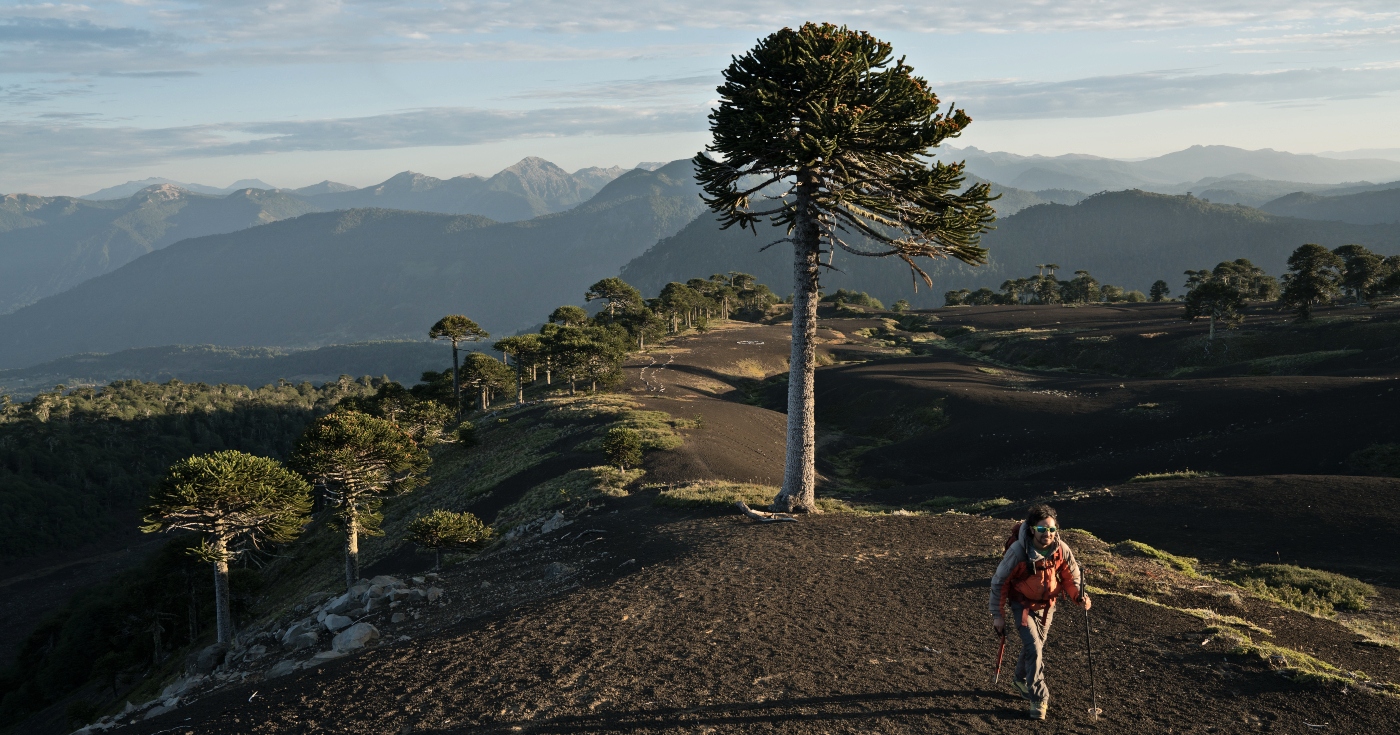
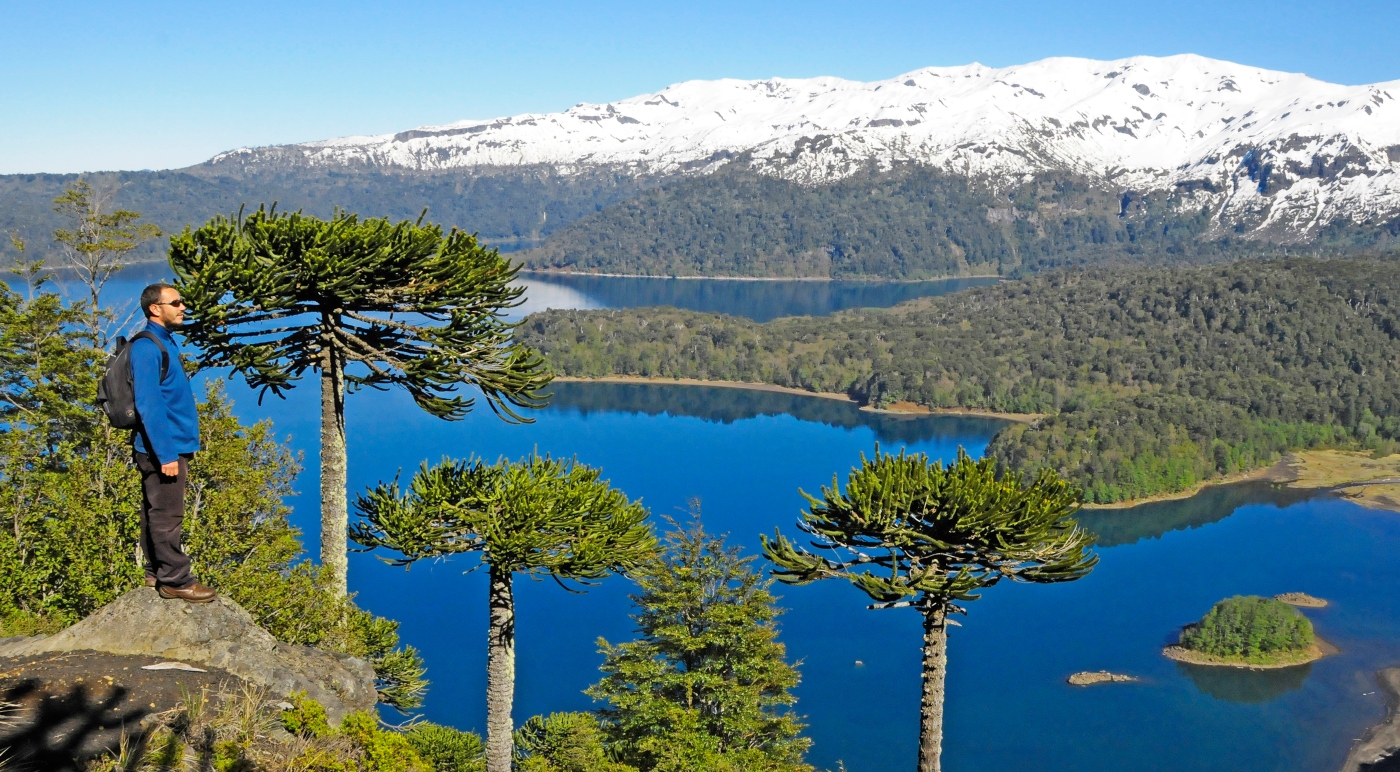
This evergreen tree can reach up to 50 meters in height and over 2 meters in trunk diameter.
Its pyramidal, umbrella-like crown develops with branches arranged around the trunk.
When young, its branches may touch the ground, but as it ages, the crown rises, leaving a straight, clean trunk that stands out in the landscape.
Leaves from Another Era
The Pehuén’s leaves are rigid, spiny, and a shiny dark green. They measure between 3 and 4 cm and are arranged spirally, completely covering the branches.
This morphology gives it a prehistoric appearance, helping to distinguish it from similar species such as Araucaria angustifolia, native to Brazil.
Seeds and Cones: An Ancestral Food
Araucaria araucana is a dioecious species, meaning there are male and female trees.
The male cones release pollen in winter, while the large, spherical female cones take nearly two years to mature.
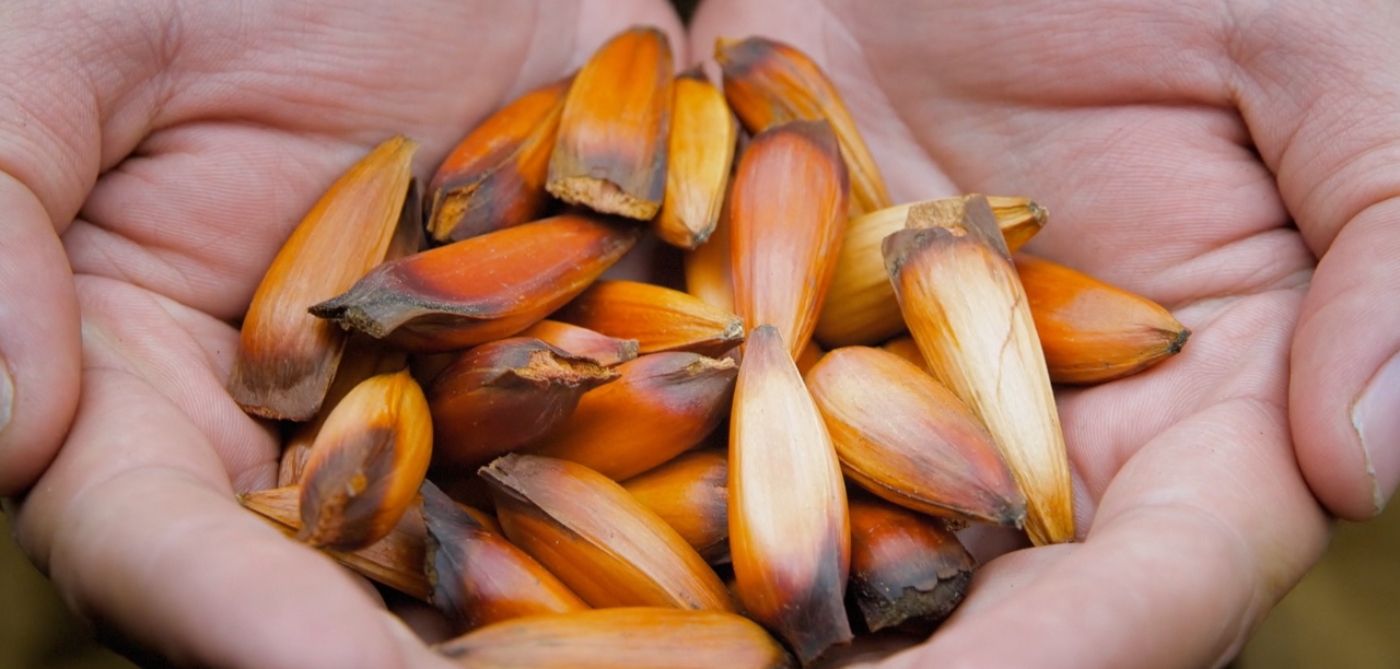
From them come the famous piñones—edible seeds rich in fatty acids like omega 3 and 6, vitamins, and minerals—which have been a staple food for centuries for the Mapuche Pehuenche people (pewen-che: people of the pehuén).
Piñones are culinary chameleons: they can be used in sweet recipes like tarts and cookies, or savory dishes, sautéed with accompaniments, boiled, or ground into chimichurri and hummus.
Adapted to Extreme Conditions
The Pehuén grows on well-drained volcanic soils in the Andes Mountains and the Nahuelbuta Range, enduring prolonged snow, drought, and extreme temperatures.
Its thick bark, which can reach 14 cm, acts as a natural barrier against fire—a key adaptation in areas with high volcanic activity.
A Living Legacy Under Threat
The natural regeneration of the Pehuén is slow and complex. The seeds have limited viability and only germinate well in canopy openings.
This tree can live more than 1,000 years, but today it faces significant threats, including habitat fragmentation, forest fires, and massive seed harvesting.
In Chile, it is classified as Vulnerable and has been protected as a Natural Monument since 1976. It is also listed in Appendix I of CITES, regulating its international trade.
More Than a Tree
Araucaria wood is valuable and of high quality, historically used in construction, carpentry, and furniture-making. However, today its greatest value is ecological and cultural.
Piñones are part of the Mapuche food heritage, and the forests where it grows form unique ecosystems, sharing space with species such as lenga, ñirre, coigüe, raulí, and mañío.
Where in Chile Is It Found?
Its presence extends across the towering summits of the Andes and the elevations of the Nahuelbuta Range. Moreover, its protection and conservation are ensured in various natural areas, including:
- Conguillío National Park: Famous for Araucaria forests surrounding turquoise lakes and active volcanoes.
- Tolhuaca National Park: A natural sanctuary where Araucaria coexists with other native species, forming an ecosystem of incalculable value.
- China Muerta National Reserve: A vital space for the preservation of this species, where significant research and conservation efforts take place.
- Villarrica National Park: With its iconic Araucarias growing on the volcano’s slopes, it offers landscapes of overwhelming beauty.
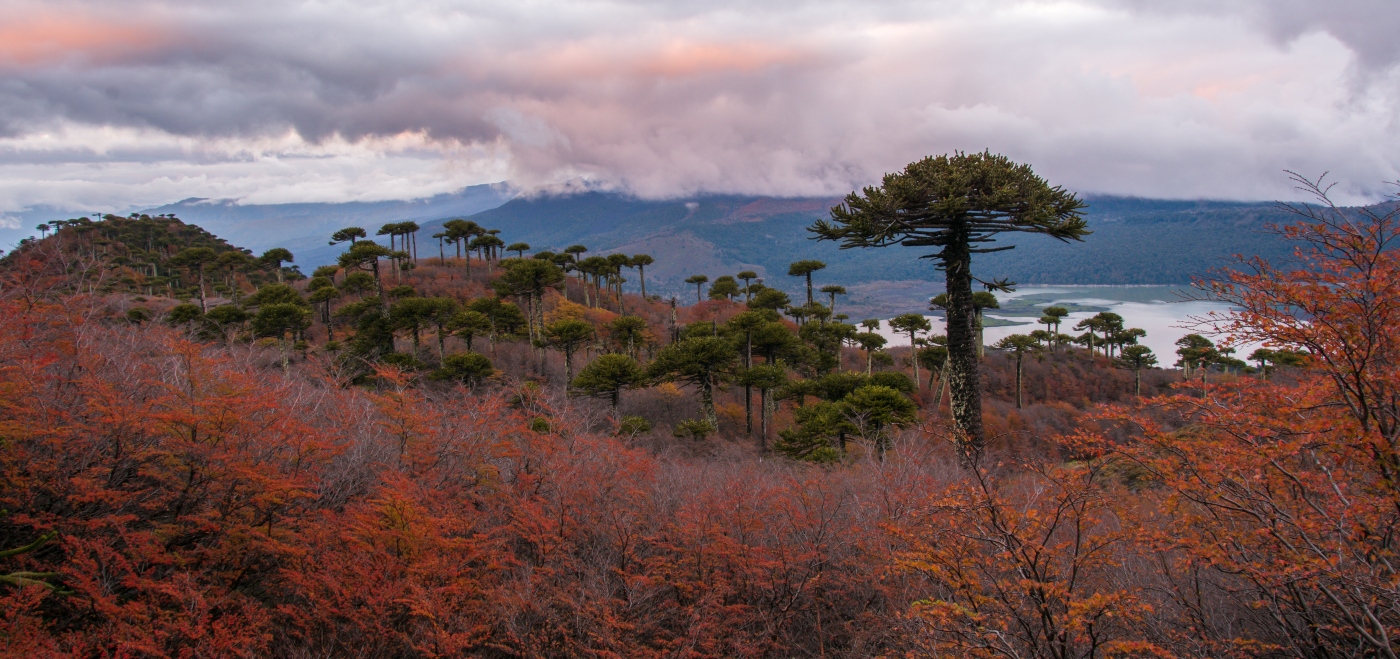
This millenary tree not only contributes to the scenic beauty of southern Chile’s temperate forests but also embodies a profound connection between nature, culture, and the Mapuche worldview.
For this indigenous people, the Araucaria is a sacred being, provider of nourishment (the piñón), and a symbol of wisdom, resilience, and deep connection.
Protecting it is a commitment to our biodiversity, ensuring the continuity of a unique ecosystem while respecting and valuing our history—so that future generations can marvel at the beauty of the Araucaria and understand its profound significance.
If you dream of exploring the Araucaria forests and discovering Mapuche culture in their homeland, we can help you plan a unique journey.
We organize tailor-made tours across Chile that include authentic experiences in these ancient landscapes. Learn more about our custom trips