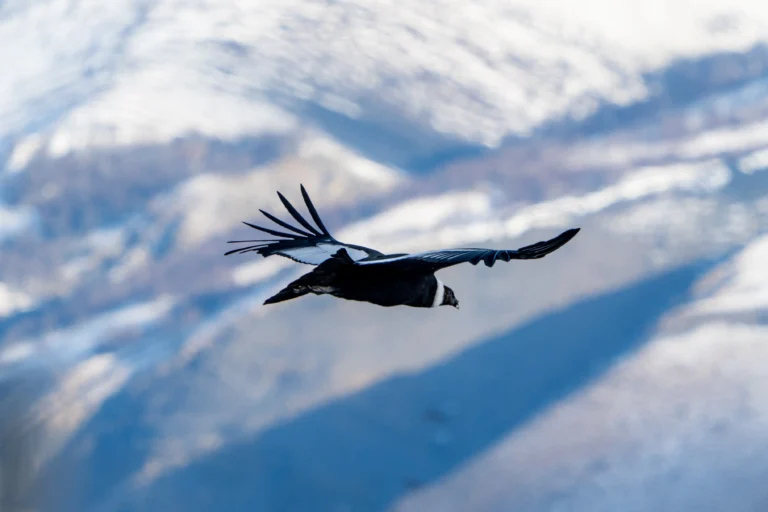
The Andean condor, a majestic bird of prey, soars through the skies of Chile as a powerful symbol of freedom and strength.
With its silhouette stretching across the Andes and its presence rooted in ancestral myths, the condor connects us to nature and the ancient cultures of South America.
With a wingspan of up to 3.2 meters and a body length of up to 1.2 meters, it’s one of the largest flying birds on Earth.
But beyond its size, its ecological role is essential.
As a scavenger, it feeds on animal carcasses, helping recycle nutrients and maintain the natural balance of mountain ecosystems.
A Bird Built for Altitude
The condor primarily feeds on dead animals using its strong, hooked beak to tear through tough hides.
While uncommon, it may occasionally prey on weak, young, or wounded animals.
Perfectly adapted to high elevations, it lives at altitudes of up to 5,000 meters.
Using thermal air currents, it can travel more than 150 kilometers a day, gliding effortlessly for hours.
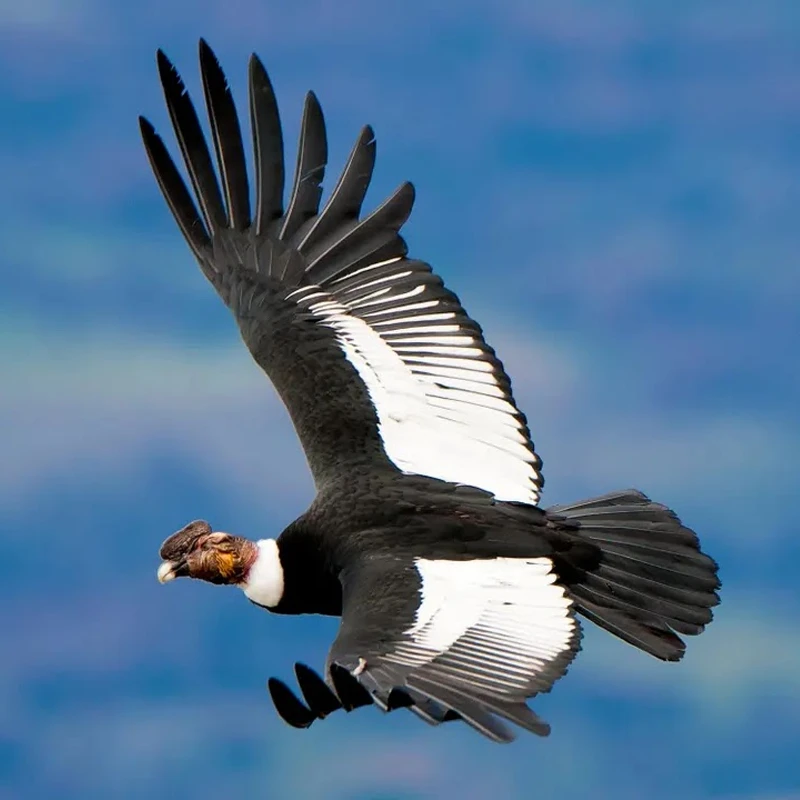
One of its most distinctive features is the spread of its primary feathers, resembling open fingers when in flight.
How to Recognise an Andean Condor
Males are slightly larger than females and are distinguished by a fleshy crest on their heads, absent in females.
They don’t vocalize like other birds; instead, they make hissing or grunting sounds that are only audible at close range.

Breeding: One Egg Every Two Years
Their reproductive cycle is slow.
A pair will lay only one egg every two years, and the chick will stay in the nest for around 10 months.
Sexual maturity is reached at approximately six years of age.
Condors usually rest in groups on rocky cliffs.
They don’t build traditional nests; instead, they lay their eggs directly on the ground.
To identify a resting area, look for rocks stained white from droppings — a clear sign of recent activity.
Where to See Condors in Chile
Chile is one of the best places to observe condors in the wild.
Near Santiago, Cajón del Maipo and Farellones are excellent locations.
The best time to see them is in winter (June to September), when they descend from higher altitudes in search of food.
Early mornings and late afternoons offer the best chances, as these are the times they take flight or return to roost.
How to Watch Them Without Disturbing Them
To observe them responsibly, keep your distance, avoid loud noises, and never try to feed them.
Respecting their space ensures their well-being and makes the experience more meaningful.
Why the Andean Condor Is Threatened
Despite their imposing presence, Andean condors are considered vulnerable.
Their population has declined due to slow reproduction, habitat loss, and human threats like poisoned bait or hunting — often driven by the mistaken belief that they kill livestock.
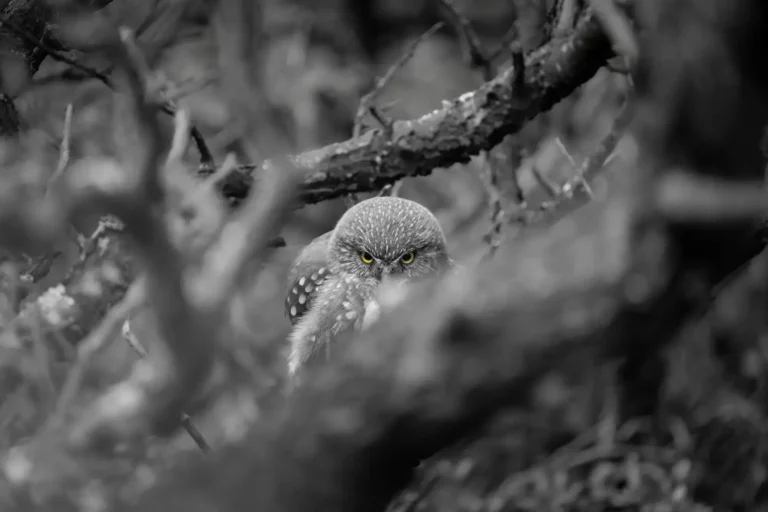
It is the same pattern that threatens several of Chile’s endemic birds: small populations that never get the chance to recover.
Fortunately, conservation projects are working to protect them, rehabilitate injured individuals, and raise awareness about their importance in mountain ecosystems.
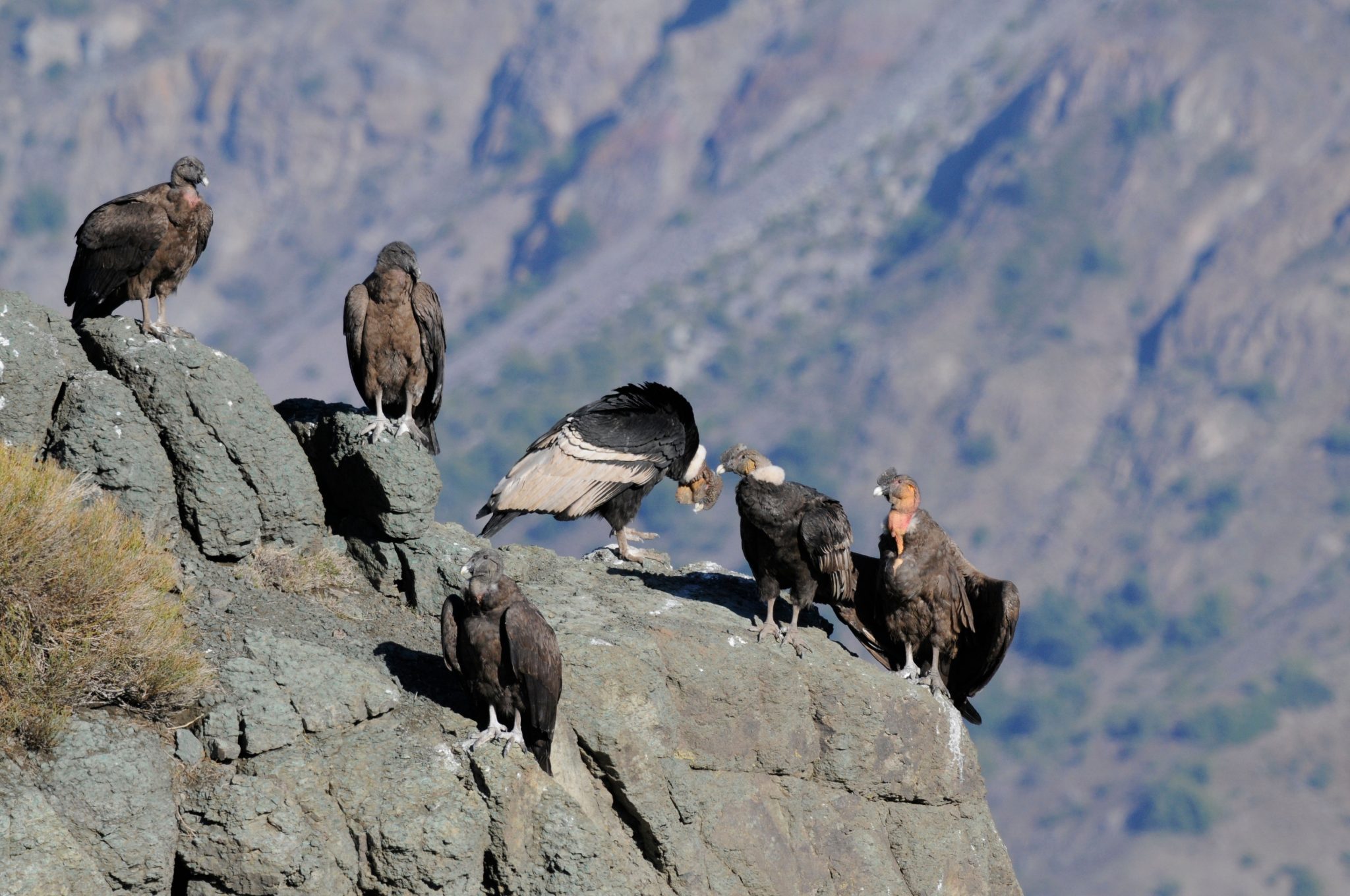
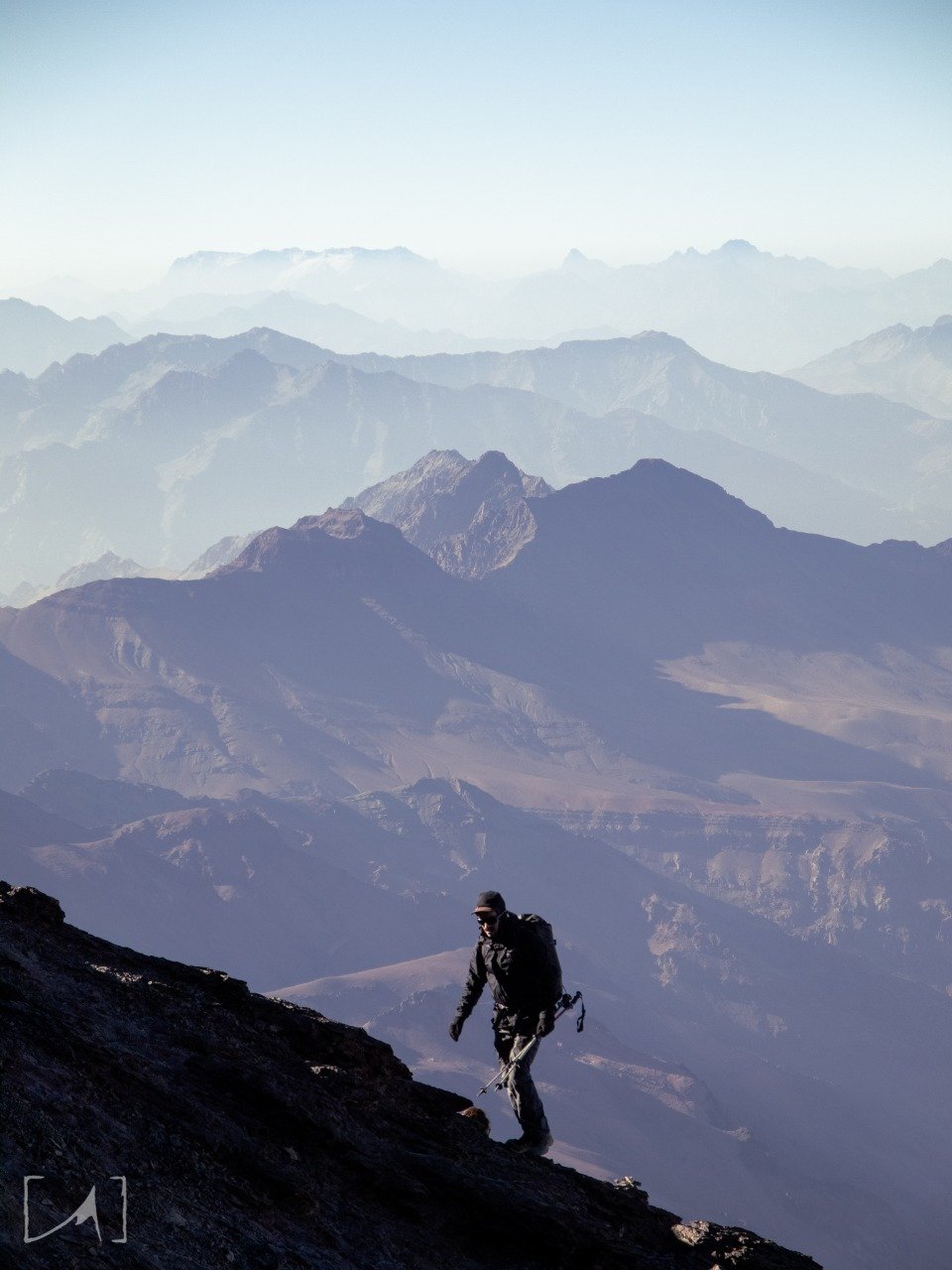
Protecting the condor means protecting a vital part of the Andes. Watching one in flight is a humbling reminder of nature’s grandeur. When you’re in the mountains, look up — and let its flight move you.
Want to See a Condor in the Andes?
Finding them is not a matter of luck. It is a matter of knowing where to stand, and at what hour.
– Trips to areas with active roosting sites
– On-site interpretation: identifying the species, not just watching it pass
– Guides who know the Cajón del Maipo and Farellones routes.
– Responsible viewing, with no approaching and no feeding
– A direct contribution to conservation: we are part of 1% for the Planet